Thermal & Night Vision Operations
Night Operations
The majority of feral animal activity happens at night. Thermal imaging and night vision technology allow PJD to operate when deer, pigs, foxes and wild dogs are most active — dramatically increasing effectiveness compared to daylight-only programs.
Why Night Operations Change Everything
Feral animals are largely crepuscular and nocturnal — most active at dawn, dusk and through the night. A control program that operates only during daylight hours is working against the animal's natural behaviour and will always be less effective than one that targets peak activity periods.
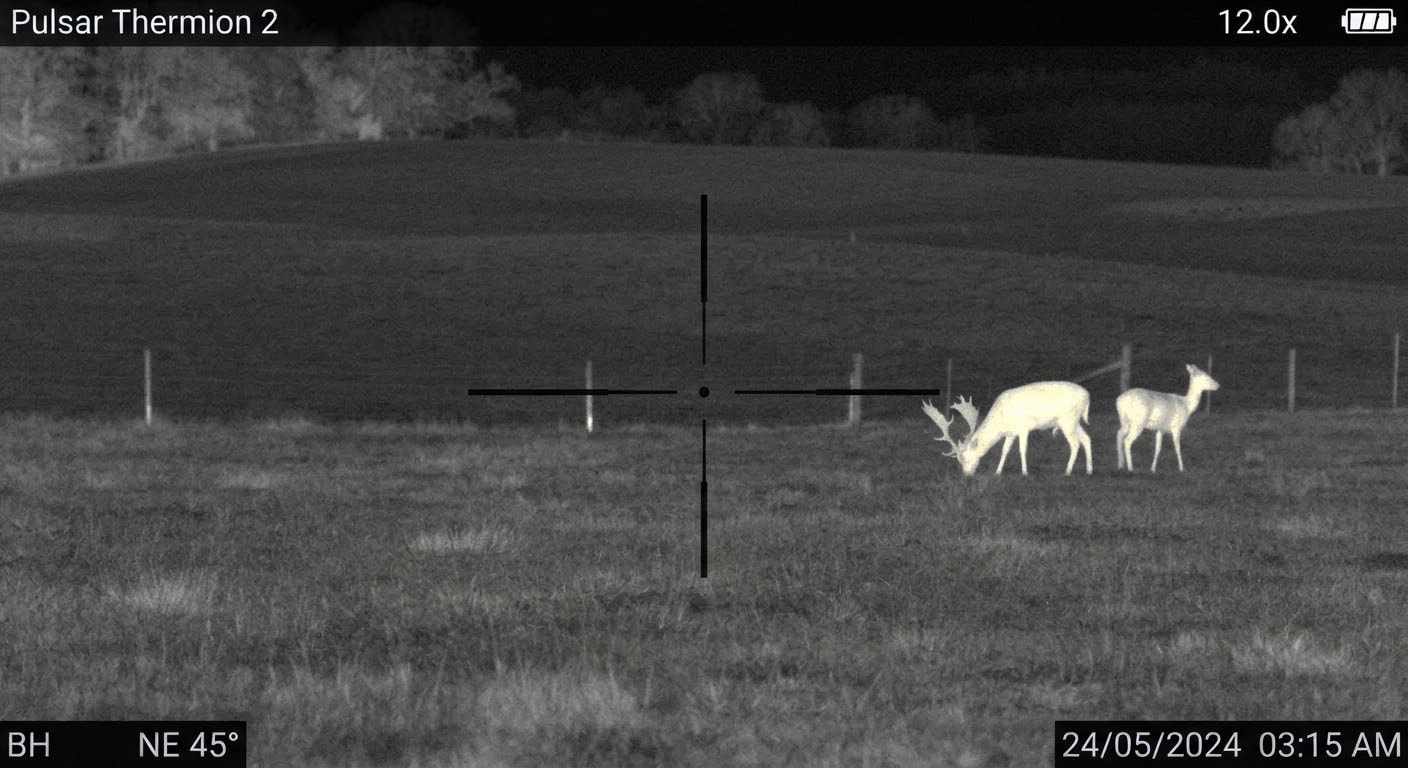
Thermal imaging technology detects heat signatures in complete darkness, through light fog and across dense scrub. It doesn't require any light source — no spotlights, no vehicle headlights, nothing that alerts animals to the operator's presence. Combined with night vision optics for target identification and shot placement, it is the most effective tool available for nocturnal feral animal control.
Paul operates thermal and night vision equipment to a professional standard, built up over years of field use across Victorian terrain. The investment in this technology — which is what the Donations page supports — directly translates to better outcomes for landholders.
Why Thermal Night Operations Outperform Daylight Control
Target Animals at Peak Activity
Deer, pigs, foxes and wild dogs are most active between dusk and dawn. Night operations target animals when they are feeding, moving and most exposed — not sheltering in dense cover during daylight.
Detect Through Darkness & Cover
Thermal imaging detects heat signatures through complete darkness, light fog and across scrub that would be impenetrable to the naked eye or a spotlight. Animals cannot hide from their own body heat.
Silent, Non-Alerting Approach
Unlike spotlighting from a vehicle, thermal stalking on foot produces no light, no engine noise and no vehicle movement. Animals are not alerted before the operator is in position.
Identify Before Engaging
Night vision optics allow positive species and target identification before any shot is taken. Non-target animals — livestock, native wildlife — are identified and avoided. Safety is never compromised.
Cover More Ground Effectively
Thermal scanning from elevated positions allows Paul to assess large areas quickly — identifying where animals are concentrated and directing effort to the highest-impact locations.
Works Year-Round
Night operations are effective in all seasons. In summer when daylight hours are long and animals are heat-stressed, night operations are often the only practical window for effective control.
Equipment Used in Night Operations
Thermal Monocular / Spotter
Handheld thermal imaging device used for scanning and detecting animals at distance. Detects heat signatures in complete darkness across open country and through light scrub.
Thermal Rifle Scope
Thermal imaging scope mounted to the rifle for target identification and shot placement in darkness. Allows precise, humane engagement without any external light source.
Night Vision Optics
Image-intensifying night vision devices used in conjunction with thermal for positive target identification and safe operation in low-light conditions.
Suppressed Centrefire Rifle
Sound-moderated centrefire rifle reduces report and muzzle flash — minimising disturbance to livestock, neighbours and remaining animals during multi-animal operations.
Trail Cameras
Infrared trail cameras deployed pre-operation to establish movement patterns, feeding areas and population estimates. Intelligence that makes night operations more targeted and effective.
4WD Field Vehicle
Capable 4WD for access to remote paddocks and rough terrain. Configured for quiet, low-profile approach to minimise disturbance before operations begin.
Species Targeted in Night Operations
What to Expect as a Landholder
Night operations require your written permission and a safety briefing before work begins. Paul will walk the property with you (or by himself if you prefer) during daylight to identify hazards, livestock locations, neighbouring property boundaries and any areas that are off-limits.
You don't need to be present during the operation — in fact, most landholders prefer not to be. Paul will provide a full debrief the following morning covering numbers taken, areas covered and any observations about animal behaviour or population size.
Night operations are typically conducted over one to three consecutive nights for maximum impact. A single night rarely achieves the population reduction that a multi-night program delivers — animals that survive the first night become more wary, so consecutive pressure is more effective than sporadic visits.
Ready to Run a Night Operation on Your Property?
Call Paul to discuss what a thermal night program can achieve on your land. The difference between a daylight-only program and a full night operation is significant — and the results speak for themselves.