Feral Pest Species
Wild Dogs
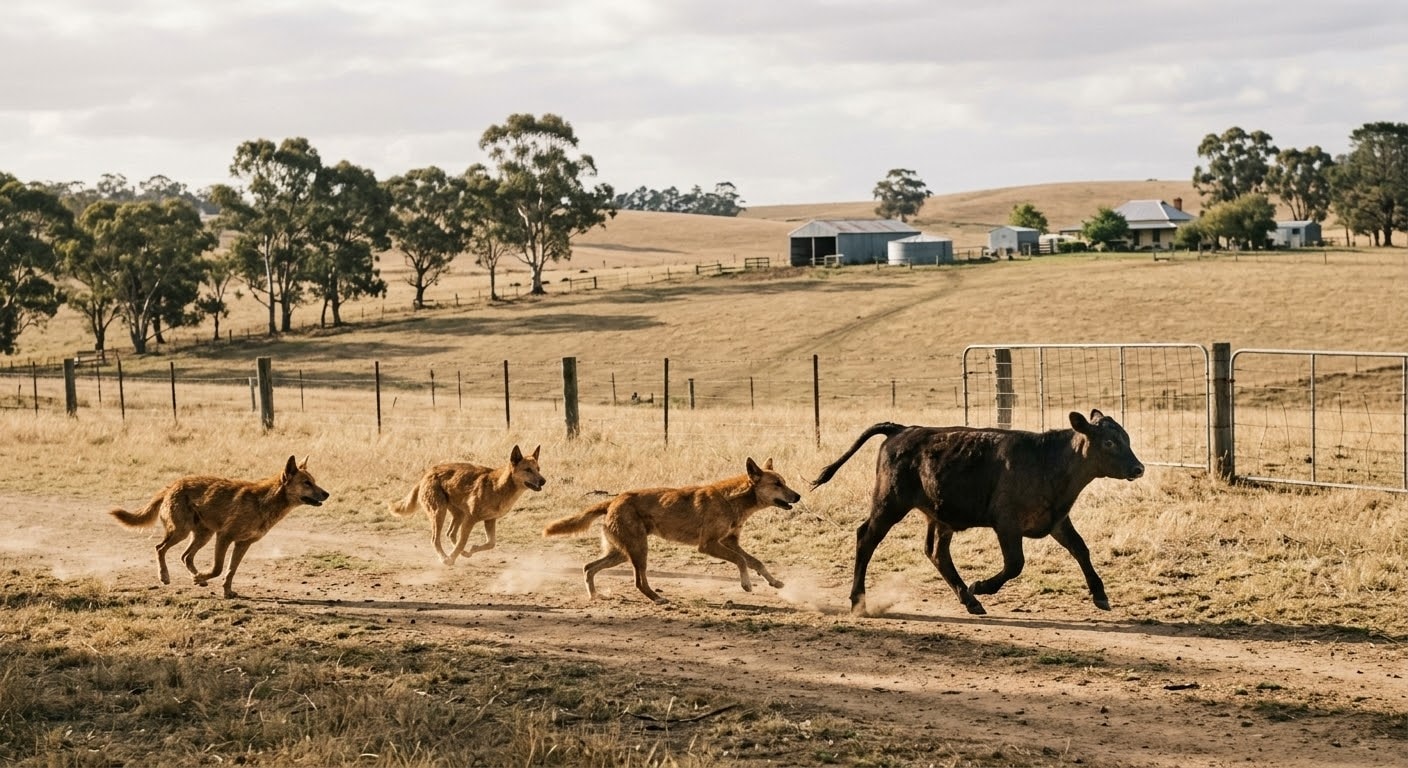
Wild dogs — including dingoes, feral domestic dogs and hybrids — are one of the most economically damaging feral pests for Victorian livestock producers, causing devastating attacks on sheep, cattle and other farm animals.
A Serious Threat to Victorian Livestock
Wild dogs in Victoria include pure dingoes (Canis lupus dingo), feral domestic dogs and hybrids of the two. All three cause significant livestock losses and are managed as a single pest category. Dingoes are the dominant wild dog type in Victoria's high country and ranges.
Wild dogs are highly intelligent, adaptable and capable of covering large distances — a pack can range over hundreds of square kilometres. They are primarily nocturnal and extremely wary of humans, making them difficult to detect and control.
The economic impact of wild dogs on Victorian livestock producers is significant. Beyond direct livestock losses, wild dogs cause ongoing stress to livestock that reduces production, and the cost of exclusion fencing and ongoing control programs adds substantially to the financial burden on affected properties.
How to Identify Wild Dogs on Your Property
Wild dogs are elusive and mostly active at night, but they leave clear signs of their presence. Here's what to look for.
Tracks & Footprints
Wild dog tracks are similar to large domestic dog prints — four toes with claw marks, roughly oval in shape. Dingo prints are typically 6–9 cm long and 5–7 cm wide, with the two middle toes more prominent. Look for tracks in soft soil around water sources, along fence lines, creek banks and on farm tracks. Wild dogs often follow the same routes repeatedly.
Livestock Attack Signs
Wild dog attacks on sheep are distinctive — multiple animals killed or injured in a single event, with bites to the throat, hindquarters and flanks. Sheep may be found dead with no flesh consumed (killing for killing's sake is common), or partially eaten starting from the hindquarters. Scattered wool and blood trails indicate a chase and attack.
Scats & Droppings
Wild dog scats are similar to large domestic dog droppings — cylindrical, 3–6 cm in diameter and 10–20 cm long. They contain fur, bones and feathers from prey. Scats are often deposited on prominent objects — rocks, logs, mounds and track intersections — as territorial markers. Fresh scats have a strong odour.
Howling & Vocalisations
Wild dogs and dingoes produce a distinctive howl — a long, mournful sound quite different from a domestic dog bark. Howling is most common at dawn, dusk and during the night. A chorus of howls from multiple animals indicates a pack. Hearing howling near your property is a strong indicator of wild dog presence.
Scratch Marks & Scent Posts
Wild dogs mark their territory by scratching the ground with their hind feet near scent posts — prominent rocks, logs, fence posts and track intersections. Look for disturbed soil with claw marks and nearby scats or urine. These scent posts are used repeatedly and are reliable indicators of regular wild dog activity.
Livestock Behaviour Changes
Livestock that are being harassed by wild dogs show characteristic behavioural changes — sheep mob tightly and refuse to spread out to graze, cattle become agitated and aggressive, and animals avoid areas they previously used freely. Unexplained weight loss, poor condition and reduced production can also indicate ongoing wild dog harassment even without visible attack evidence.
How Wild Dogs Damage Your Property
Sheep & Lamb Predation
Wild dogs are the most serious predator of sheep in Victoria. A single dog or small pack can kill dozens of sheep in a single night — often killing far more than they consume. Losses during lambing are particularly severe, with newborn lambs highly vulnerable to attack.
Cattle & Calf Predation
Wild dogs attack and kill calves, and will harass and injure adult cattle. Attacks on cattle are most common during calving, when cows are distracted and calves are vulnerable. Injured cattle that survive attacks often require veterinary treatment and may not recover fully.
Livestock Stress & Production Loss
Even without direct predation, the presence of wild dogs causes chronic stress in livestock. Stressed sheep and cattle lose condition, have reduced reproductive rates and produce less wool and milk. The production losses from ongoing harassment can exceed the direct losses from predation.
Mustering & Handling Difficulties
Livestock that have been harassed by wild dogs become difficult to muster and handle. Sheep may refuse to move in certain directions, scatter unpredictably and be harder to work with dogs. This increases labour costs and reduces the efficiency of farm operations.
Injury to Farm Dogs
Wild dogs will attack and kill working farm dogs, particularly at night. The loss of a trained working dog is both a financial and operational setback for livestock producers. Farm dogs that survive wild dog attacks may be permanently affected in their working ability.
Native Wildlife Predation
Wild dogs prey on native wildlife including wallabies, wombats, echidnas and ground-nesting birds. On properties with remnant native vegetation, wild dog predation can significantly impact local wildlife populations.
How Paul Controls Wild Dogs
Wild dog control requires targeted, intelligence-driven operations — these are highly wary animals that require specialist knowledge to manage effectively.
Thermal & Night Vision Operations
Wild dogs are primarily nocturnal and thermal imaging is the most effective tool for locating them after dark. Paul uses thermal equipment to identify individual animals and packs, assess movement patterns and conduct targeted removal operations.
Track & Sign Assessment
Before operations, Paul surveys the property for tracks, scats, scent posts and attack sites to build a picture of wild dog activity — how many animals, where they are moving and when they are most active. This intelligence drives targeted, efficient operations.
Ambush & Calling
Wild dogs can be called in using prey distress calls and howling, particularly during the breeding season. Paul uses calling techniques combined with thermal equipment to locate and remove animals that would otherwise be extremely difficult to approach.
Coordinated Area Management
Wild dogs range over large areas and cross property boundaries. Paul works with neighbouring landholders to coordinate control operations across a wider area, which is significantly more effective than single-property management.
Victorian Regulations & Field Guide
Key legal, identification and field-handling information for wild dogs and dingoes in Victoria.
Wild Dogs Attacking Your Livestock?
Contact Paul immediately if wild dogs are attacking your livestock. Early intervention prevents pack establishment and reduces ongoing losses.
See also: Pricing · All Feral Pest Species